
A sewer line inspection uses a waterproof camera to show you the exact condition of your underground pipes — in real time, before problems become emergencies. Most homeowners in the Los Angeles area skip it. The ones who don’t are rarely surprised by a $15,000 repair bill.
Here’s everything you need to know: what the inspection involves, what the camera finds, who needs one and when, and what it costs.
What Is a Sewer Line Inspection?
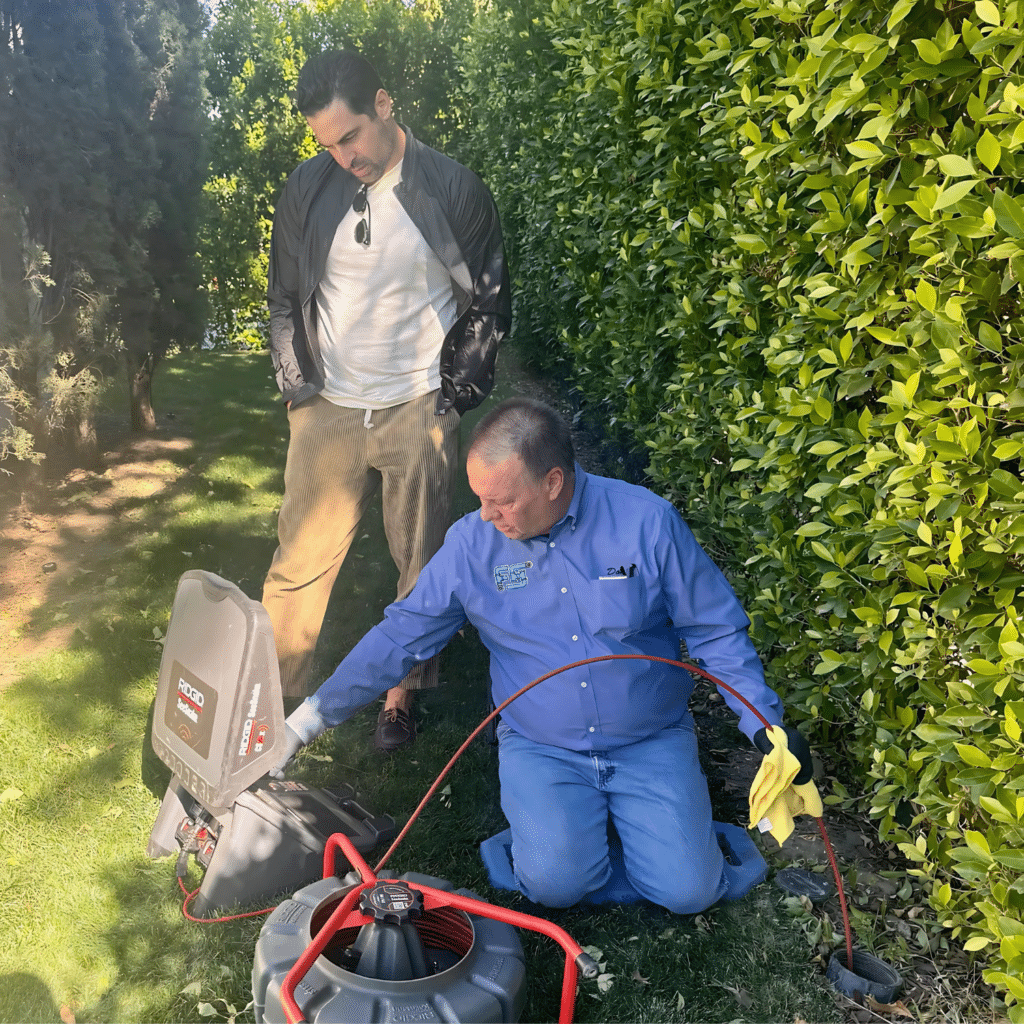
A sewer line inspection is a procedure utilizing camera/video-based diagnostics of your underground pipe — the one that carries waste from your home to the city sewer main. A technician inserts a waterproof camera on a flexible cable through your sewer clean-out access point and pushes it through the full length of the line, typically 50 to 250 feet.
The camera transmits a live video feed. Everything the camera sees — root growth, cracks, grease buildup, pipe offsets — is visible on a monitor in real time. A good technician narrates the footage as they go, so you understand exactly what you’re looking at.
At Father & Son Hydro-Jetting, every inspection includes a complimentary narrated video delivered the same day, along with a written report. After more than 20,000 inspections across the San Fernando Valley, we’ve found that what separates a useful inspection from a useless one is the explanation that comes with it.
Did You Know: The sewer line is one of the most expensive systems in a home to repair, yet it’s the one system a standard home inspection never covers. Most homeowners don’t learn this until they’re already dealing with a backup.
What Does a Sewer Camera Inspection Reveal?
A camera inspection shows the full interior of your line from the cleanout to the city connection. Here’s what we typically find — and what each finding means for you.
Root intrusion is the most common issue we see in the San Fernando Valley and all Los Angeles. Ficus, eucalyptus, and willow trees are everywhere in LA, and their roots actively seek water. They enter through small joint gaps and grow over time, catching debris and causing recurring backups. Left untreated, they can fracture the pipe entirely.
Grease and scale buildup reduces flow gradually. Kitchen grease sticks to pipe walls and hardens. In older cast iron pipes, mineral scale deposits can shrink the interior diameter by 50% or more — and the pipe shows no visible symptoms until the line is nearly blocked.
Bellied or offset pipes occur when sections of pipe shift due to soil movement, settling, or seismic activity. A belly creates a low point where waste collects rather than flowing out, usually caused by a sewer line being trenched out by hand. Los Angeles’s clay soils and earthquake history make this more common here than in most other markets.
Cracks, fractures, and collapses are more common in older clay and cast iron pipes. A small crack becomes a bigger problem when roots find it. A collapsed section means immediate attention is needed.
Pro Tip: Not every inspection turns up a problem. A significant portion of the inspections we run come back clean. Knowing your pipes are in good condition is valuable information — especially if you’re buying a home or planning a major renovation.
Who Needs a Sewer Line Inspection — and When
The short answer: most homeowners benefit from a periodic inspection, and certain situations make one a clear priority.
Home buyers should always order a sewer scope before closing. Standard home inspections don’t cover underground sewer lines. A failing line can cost $5,000 to $25,000 or more to repair. A $350 inspection during the contingency period gives you real information before you’re legally committed. Our pre-purchase sewer inspection guide covers exactly how buyers use the findings to negotiate or protect themselves at closing.
Older homes in the San Fernando Valley — particularly those built before 1970 — often have original cast iron and sometimes Orangeburg. These materials have a lifespan, and many are now approaching or past it. Periodic inspections help you understand the condition of your system before it fails.
Homeowners with recurring drain problems are often dealing with something deeper than a surface clog. If you’ve had a plumber snake the same drain more than once in the past year, the issue likely isn’t at the drain — it’s further down the line. A camera inspection shows you what’s actually going on.
Before and after major plumbing work is another smart time to schedule. Inspecting before hydro jetting helps us understand what we’re dealing with. Inspecting after confirms the results.
Did You Know: In almost every city in Los Angeles, your sewer line is your responsibility even after it leaves your property. You are responsible for your sewer line up to AND including the connection to the city’s sewer.
What a Sewer Line Inspection Costs
A residential sewer line inspection in the Los Angeles area typically runs at $350 and additional $50 if we have to go on the roof for inspection. Father & Son Hydro-Jetting’s inspections include the full camera inspection, same-day written report, and complimentary narrated video.
That’s the upfront cost. The comparison that matters is what you’re protecting against. A missed crack leads to root intrusion. Unchecked root intrusion leads to a blocked or fractured line. Emergency sewer repairs — especially those requiring excavation — routinely run $8,000 to $25,000. The math isn’t subtle.
For homeowners dealing with recurring slow drains or backups, pairing a camera inspection with professional hydro jetting is often the most efficient approach. The inspection identifies the problem; the hydro jetting solves it and cleans the full pipe circumference.
How the Inspection Process Works
Most residential sewer inspections take between 45 minutes and 90 minutes from start to finish.
The technician locates your clean-out access point — typically at the side of the house or in the yard — and feeds the camera cable into the line. The camera pushes through at a measured pace, pausing at anything worth examining. If the line is blocked, the technician will note where the camera stopped and what was visible up to that point. If there’s heavy buildup that’s obscuring the pipe walls, they may recommend a light cleaning before proceeding with a full inspection.
After the run, you get a walkthrough of the footage. At Father & Son, we narrate the inspection live so you can ask questions as we go, and we send the video to you the same day. No waiting a week for a report, no technical jargon without explanation.
If structural issues are found, we can walk you through options including trenchless sewer rehabilitation methods like CIPP lining or pipe bursting — which address damage without tearing up your yard or driveway.
Pro Tip: Ask your inspector to walk you through the footage before they pack up. A one-minute verbal explanation at the job site is worth more than a written report you read later without context.
What Happens After the Inspection
If the camera comes back clean, you’re done. You have peace of mind and documentation of your pipe condition.
If the camera finds a problem, the next step depends on what it is. Grease and root buildup is typically addressed with hydro jetting. Heavy scale in cast iron pipes may require descaling before high-pressure cleaning. Structural damage — cracks, offsets, collapses — points toward rehabilitation options like CIPP lining or pipe bursting, depending on severity and location.
One thing we’re direct about after 45 years in the field: not everything found on camera requires immediate action. Some conditions warrant monitoring. Others need to be addressed soon. A few need attention right away. We tell you which is which.
Frequently Asked Questions
What does a sewer line inspection include? A sewer line inspection includes a camera run through the full length of your underground pipe, a live video feed of pipe conditions, and a written report. At Father & Son, every inspection includes a complimentary narrated video delivered the same day.
How often should I get a sewer line inspection? Most homes benefit from an inspection every two to three years. Older homes with cast iron or Orangeburg pipes, properties with large trees nearby, and homes with a history of drain issues should inspect more frequently. Any time you buy a home or notice recurring drain problems is a good reason to schedule one.
Can a sewer inspection detect all pipe problems? A camera inspection reveals conditions visible to the camera — root intrusion, buildup, cracks, offsets, and collapses. It cannot identify issues outside the pipe, like soil conditions or pipe depth. In most cases, the camera gives you an accurate picture of what’s actually happening inside your line.
Is a sewer inspection worth it if I have no drain problems? Yes. Many of the most costly sewer conditions — root intrusion, scale buildup, bellied pipe sections — show no obvious symptoms until the line is significantly compromised. An inspection finds these before they become emergencies.
Does the sewer inspection damage my pipes? No. The camera runs on a flexible cable and is sized for your pipe diameter. There’s no pressure, no cutting, and no physical contact with the pipe walls. The inspection is entirely non-invasive.
To wrap up, a sewer line inspection is one of the lowest-cost, highest-value things a homeowner can do. At $350 and additional $50 if we need to go to the roof to inspect, you get a clear picture of what’s underground, a same-day video you can keep, and the information you need to make a smart decision — whether that’s doing nothing, scheduling maintenance, or addressing a problem before it escalates.
Book your sewer line inspection with Father & Son Hydro-Jetting at (818) 900-7493 or request a free estimate online. We serve Canoga Park, Chatsworth, West Hills, Woodland Hills, Northridge, Sherman Oaks, Granada Hills, Santa Clarita, and the wider San Fernando and Conejo Valleys — Monday through Saturday, with 24/7 emergency availability.