
What Is a Grease Interceptor and Why Does Your Commercial Property Need One?
If you run a restaurant, commercial kitchen, or food service operation in Canoga Park or the surrounding San Fernando, Santa Clarita, Conejo, and Simi Valley area, your grease interceptor is one of the most important—and most overlooked—pieces of plumbing infrastructure you own. A grease interceptor (sometimes called a grease trap or grease separator) is a plumbing device installed in your drainage system that captures fats, oils, and grease before they can enter the municipal sewer lines. Without it, or without regular maintenance, grease builds up fast and the consequences can be serious.
A clogged or neglected grease interceptor doesn’t just create backups inside your kitchen. It can trigger violations from your local health department, result in fines or temporary closure, and put a strain on the broader sewer system. In cities across the Los Angeles area, including Canoga Park, municipal codes require commercial food service establishments to maintain functioning grease interceptors—and to keep records proving regular service.
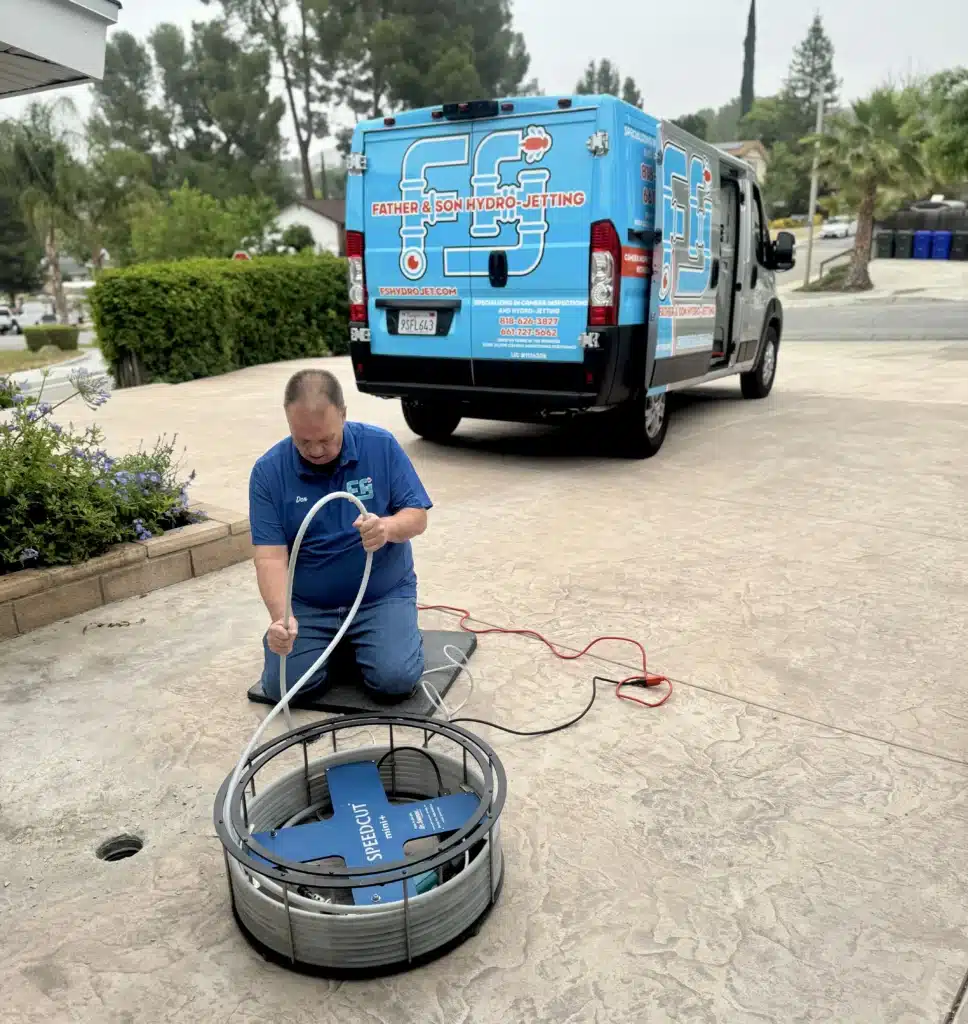
At Father & Son Hydro-Jetting, we service grease interceptors for commercial properties throughout Canoga Park, the San Fernando, Santa Clarita, Conejo, and Simi Valley. We’re a licensed, family-owned business with over 45 years of hands-on experience in drain and sewer work—and we understand what it takes to keep commercial kitchens compliant, clean, and operational.
Who This Service Is For
Grease interceptor service is specifically for commercial properties that handle food preparation. If you operate any of the following in the Canoga Park area, regular grease interceptor maintenance is not optional—it’s required:
• Restaurants and fast food operations
• Cafes, delis, and bakeries
• Hotel and event venue kitchens
• School and institutional cafeterias
• Grocery stores with food preparation areas
• Any commercial kitchen producing wastewater with fats, oils, or grease
Even if your kitchen doesn’t produce a high volume of grease, local municipal codes in the San Fernando, Santa Clarita, Conejo, and Simi Valley area generally require regular interceptor pumping and documentation. When we visit your property, we assess the condition of the interceptor, the rate of accumulation, and help you understand how frequently service will be needed based on your specific operation.
How the Service Works
The grease interceptor service process begins with accessing the interceptor unit—typically located near your commercial kitchen’s floor drains or outside the building. Our technician opens the interceptor, assesses the grease cap (the solid layer of accumulated fats and oils), the wastewater level, and the sludge layer at the bottom.
From there, we pump out the accumulated grease, wastewater, and sludge from the interceptor. Depending on the unit’s condition and the amount of buildup, we may also perform a thorough cleaning of the interceptor’s baffles and interior walls to remove hardened grease deposits. This ensures the unit can continue to function correctly and that outflow into the sewer system remains within code.
After the service, we document the work and can provide you with a service record for compliance purposes. If we observe damage to the interceptor—cracked baffles, failing seals, or structural issues—we’ll let you know so repairs can be addressed before they become a bigger problem.
What You Get Out of It
Regular grease interceptor service keeps your operation running without interruption. The most immediate benefit is avoiding the backup—the kind that shuts down a kitchen mid-service and requires emergency cleanup. Beyond that, maintained interceptors protect you from health code violations and the fines that come with them. They also extend the life of the interceptor itself and the downstream plumbing connected to it.
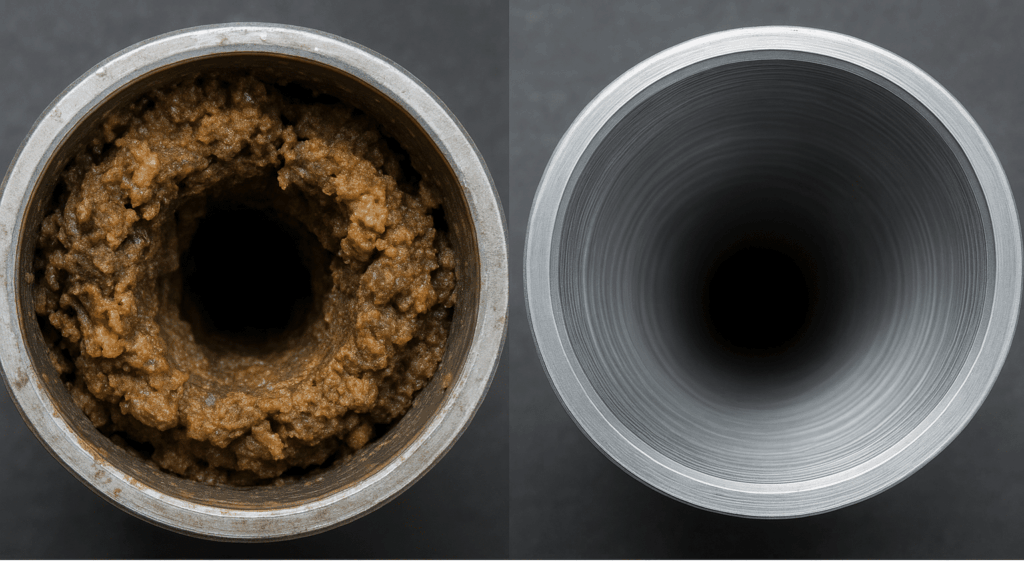
Grease that bypasses an interceptor and enters the municipal sewer system can harden inside the pipes, creating what’s known as a fatberg—a dense, concrete-like blockage that’s extremely difficult and expensive to remove. Proper interceptor maintenance keeps that grease contained and disposed of correctly, which also means you’re doing right by your community and the sewer infrastructure the whole neighborhood depends on.
Serving Canoga Park and the Greater Los Angeles Area
Father & Son Hydro-Jetting is based in the San Fernando Valley and has been serving commercial properties across the region for decades. We work with business owners in Canoga Park, Chatsworth, Northridge, West Hills, Woodland Hills, and throughout the San Fernando, Santa Clarita, Conejo, and Simi Valley.
We know how important it is for your kitchen to stay operational and compliant, and we schedule service with that priority in mind. Call us at (818) 900-7493 to arrange grease interceptor service for your commercial property. We offer free estimates and can help you set up a maintenance schedule that works for your operation.
Pair This Service With
Grease interceptors don’t work in isolation—they’re part of your overall commercial drainage system. If you’re already scheduling interceptor service, it’s a good time to consider a sewer line inspection to check for grease accumulation further down the line. Hydro-jetting is also commonly paired with interceptor service for commercial kitchens, as the high-pressure water cleaning removes grease buildup that collects inside the drain lines between the kitchen and the interceptor. If you have persistent grease odors, slow floor drains, or a history of backups, combining grease interceptor service with a hydro-jet cleaning of your drain lines is often the most effective approach. Ask us about bundling these services when you call.
Frequently Asked Questions
How often should a commercial grease interceptor be serviced?
That depends on the size of the interceptor and the volume of food your operation produces. A busy restaurant with high grease output may need service every month, while a smaller operation might go two to three months between cleanings. The general rule is that the grease and solids should never fill more than 25% of the interceptor’s total capacity. When we service your unit, we can give you a realistic recommendation based on what we observe.
What happens if we skip grease interceptor maintenance?
Over time, the interceptor fills up and stops functioning as a separator. Once that happens, grease flows directly into your building’s drain lines and eventually into the municipal sewer. This leads to blockages, backups into your kitchen, potential health code violations, and can result in fines. In serious cases, a municipal inspector can require you to shut down until the situation is corrected.
Do you provide documentation for health inspections or compliance records?
Yes. After each service visit, we document the work performed. Keeping accurate service records is important for demonstrating compliance with local wastewater management requirements, and we make sure you have what you need.
Is grease interceptor service the same as grease trap service?
The terms are often used interchangeably, though they can refer to slightly different types of devices. A grease trap is typically a smaller, indoor unit installed directly under or near a sink, while a grease interceptor is a larger outdoor unit that handles higher volumes of wastewater. We service both types on commercial properties—see our Grease Trap Service page for more on smaller indoor units.
What size interceptor does my restaurant need?
Sizing depends on your kitchen’s wastewater flow rate and the type of cooking you do. This is typically determined during the permit and installation process based on local code requirements. If you’re unsure whether your current interceptor is properly sized for your operation, we can assess it during a service visit and let you know if any issues need attention.
Can you service a grease interceptor that hasn’t been cleaned in a long time?
Yes, though heavily neglected interceptors may require more time and effort to fully clean. In some cases, a severely neglected interceptor will have hardened grease deposits that require more aggressive cleaning. We’ll assess the condition when we arrive and be upfront with you about what the service will involve.
Ready to get your commercial kitchen into compliance? Call Father & Son Hydro-Jetting at (818) 900-7493 or request a free estimate online. We serve Canoga Park and commercial properties throughout the San Fernando, Santa Clarita, Conejo, and Simi Valley.