
If your drains keep clogging up no matter how many times you call a plumber, the problem probably is not the clog itself. It is the method being used to fix it. Most drain calls end with a cable snaked through the pipe, water flows again, and everyone goes home. But the grease, the scale, and the roots that caused the problem in the first place are still clinging to the pipe walls. A few weeks or months later, you are making the same call.
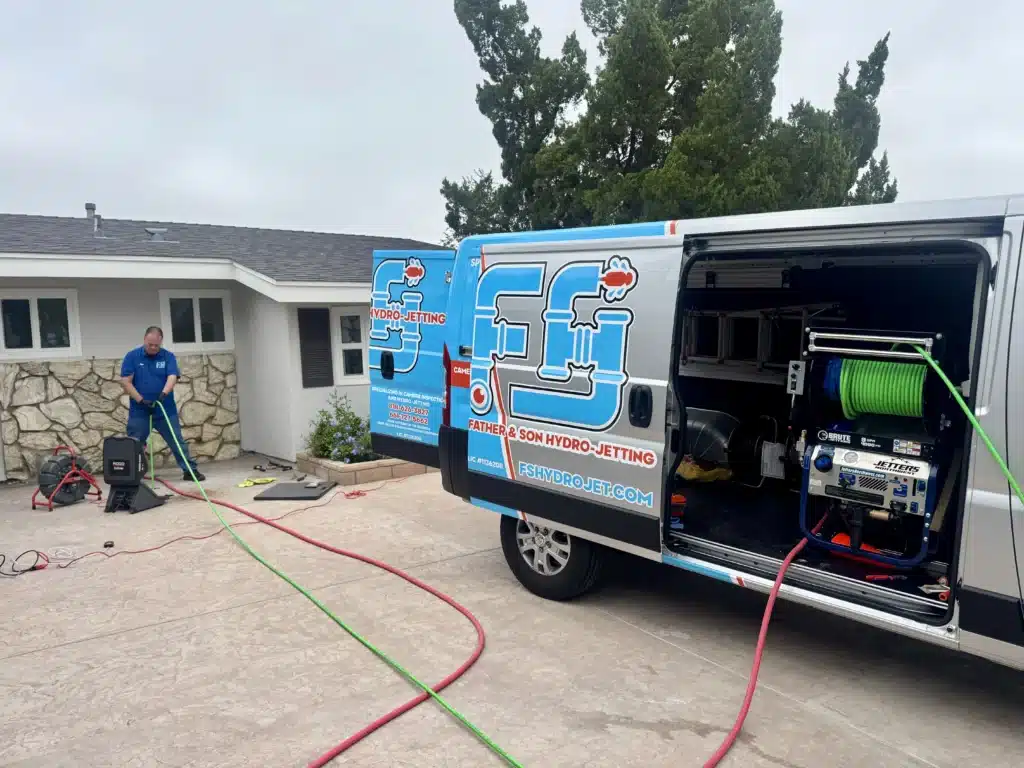
Father & Son Hydro-Jetting takes a different approach. We use high-pressure water — up to 4,000 PSI — to thoroughly clean the full interior of your pipe, not just create a temporary opening. The result is a system that has actually been cleaned, not just poked at. Homeowners and business owners throughout Canoga Park and the San Fernando Valley have relied on us for over 45 years to get their plumbing back to a state where it actually stays working.
What Is Hydro Jetting?
Hydro jetting is a drain and sewer cleaning method that uses water under extremely high pressure, delivered through specialized nozzles that are engineered to clean the full 360-degree circumference of your pipe. The water pressure breaks apart blockages — including tree roots, heavy grease accumulation, mineral scale, and sediment — and flushes everything out of the line entirely.
Unlike cabling (snaking), which essentially punches a hole through a blockage and restores partial flow, hydro jetting removes the debris from the pipe wall completely. When we finish, your pipe is clean. We can confirm that with a camera inspection right after the service so you can see exactly what your lines look like.
The Difference Between Clearing and Cleaning
There is a phrase we use at Father & Son that gets right to the point: clearing the line means the water is flowing, cleaning the line means it will stay flowing.
When a plumber snakes your drain, they are clearing it. A blade on a metal cable cuts or pushes through whatever is blocking flow. Water starts moving, the job looks done. But the grease, root material and buildup left behind on the pipe walls will start narrowing the passage again almost immediately. You are not solving the problem — you are delaying it, and paying for that delay repeatedly.
Hydro-jetting cleans. The water scours the entire surface of the pipe. Grease that has been building up for years gets flushed out. Root intrusions that have worked their way into the joint are cut apart and washed clear. What remains is a pipe that looks and functions like it should. One hydro-jetting appointment done right can extend the time between service calls significantly — often by years, not weeks.
What Hydro-Jetting Addresses
Hydro-jetting is well-suited for a range of common sewer and drain problems, including:
- Tree root intrusion in sewer lines — roots seek out moisture and often find their way into pipe joints
- Heavy grease accumulation — common in kitchen drains, restaurant lines, and older homes
- Recurring slow drains that keep coming back after snaking
- Foul odors from the drain that do not go away
- Pre-inspection cleaning — clearing the line before a camera inspection for a clearer view of pipe condition
How the Process Works
Before we begin hydro-jetting, we assess the line — typically with a camera inspection — to confirm the pipe is in a condition that can safely handle high-pressure water. Not every line is a candidate; severely deteriorated pipes need to be evaluated first.
Once we confirm the line is suitable, we insert the hydro-jet nozzle into the cleanout access point. As we advance it through the pipe, the high-pressure water blasts in multiple directions simultaneously — forward to break up blockages and rearward to push debris out of the system. We work through the entire length of the line.
After the service, we run a camera through the pipe again so you can see the results firsthand. We provide a complimentary narrated video of that inspection so you have a clear record of the condition of your plumbing system.
Who Benefits from Hydro Jetting
Hydro-jetting is a practical option for both residential and commercial properties throughout Canoga Park, Chatsworth, West Hills, Northridge, and the surrounding communities through the San Fernando, Santa Clarita, Conejo and Simi Valleys. Homeowners dealing with persistent slow drains or recurring backups are strong candidates. So are property managers maintaining older buildings, restaurants dealing with grease-heavy kitchen lines, and homebuyers who want a clean inspection of the sewer system before completing a purchase.
It is also commonly paired with sewer line rehabilitation work — particularly descaling of cast iron pipes — where clearing the scale deposits first is a necessary step before assessing what the pipe actually needs.
Pair This Service With
Hydro jetting works best as part of a complete picture of your sewer system. Consider pairing it with:
- Sewer Line Inspection — a camera inspection before and after hydro jetting confirms line condition and documents the results
- Descaling — for older cast iron pipes where scale buildup requires chain-based removal before or alongside high-pressure cleaning
- Sewer Line Rehabilitation — if the camera reveals structural issues after cleaning, we can walk you through options including CIPP lining, pipe bursting, or trenchless replacement
Hydro Jetting FAQs
Is hydro-jetting safe for older pipes? It depends on the condition of the pipe. Before any hydro jetting job, we inspect the line with a camera to assess the pipe’s integrity. If a pipe is significantly deteriorated or has cracks that could be worsened by high pressure, we will discuss that with you before proceeding. Hydro jetting is not something we apply to every situation without a look first.
How is hydro-jetting different from snaking? Snaking uses a cable with a blade to punch through or break apart a blockage, which restores flow temporarily. Hydro jetting uses water pressure to clean the full interior surface of the pipe, removing the material that caused the blockage rather than just creating an opening in it. The results tend to last significantly longer.
How long does a hydro-jetting appointment take? Most residential hydro jetting services take a few hours, depending on the length of the line and what we find during the process. Commercial lines or systems with significant buildup can take longer. We will give you a more accurate time estimate once we know what we are working with.
Will hydro-jetting kill the roots in my sewer line? Hydro jetting removes the root intrusion that is currently in the pipe. It does not prevent trees from eventually sending new roots toward the line. If you have a recurring root problem, a camera inspection can help identify where roots are entering the system, and we can talk through longer-term options from there.
Do I need a camera inspection before hydro-jetting? We recommend it. Inspecting the line first helps us understand what we are dealing with and confirms the pipe can handle high-pressure cleaning. It also means you have a before-and-after record of the work. We include a complimentary narrated video with our inspections.
How often should I have hydro-jetting done? It depends on your property and how your system is used. Some homes or businesses with specific conditions — like significant tree coverage near lines, or high grease output — may benefit from it more regularly. Others may go many years between services. We can give you a straightforward recommendation after we see the condition of your system.
Call Father & Son Hydro-Jetting
If your drains are slow, backing up, or you keep paying for the same problem over and over, call us at (818) 900-7493 or request a free estimate online. We serve Canoga Park, Chatsworth, West Hills, Northridge, Woodland Hills, Calabasas, and communities throughout the San Fernando, Santa Clarita, Conejo and Simi Valley and beyond. We are open Monday through Sunday, and emergency service is available 24/7.