
Most residential sewer line inspections take about 45 to 90 minutes. The time depends on the length of the line, access to the cleanout, camera visibility, and whether roots, buildup, or a blockage slows the inspection. Father & Son Hydro-Jetting also provides a narrated video and written report the same day, so you are not left waiting for a technical answer after the camera is out.
What happens during a sewer line inspection?
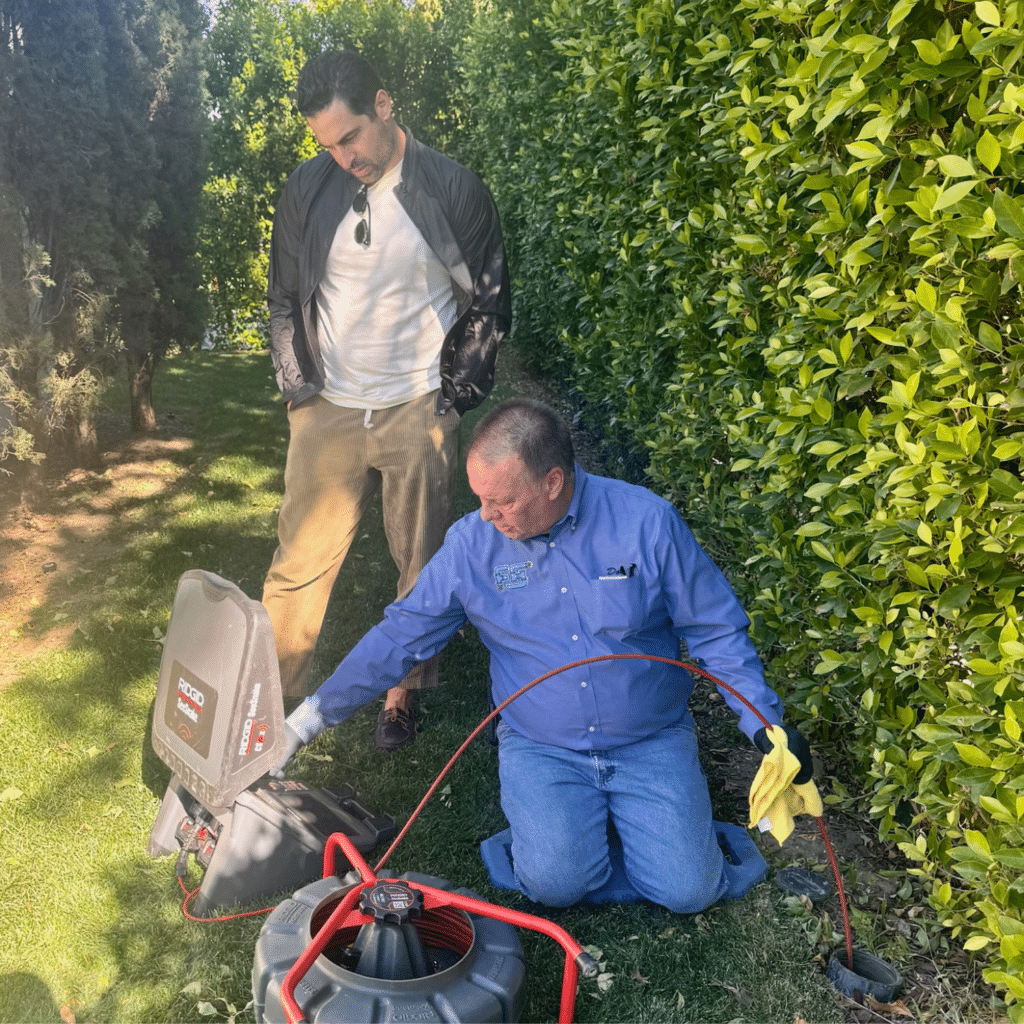
A sewer inspection uses a waterproof camera attached to a flexible cable. The technician feeds it through a sewer cleanout and watches the live video as the camera travels toward the city connection. The goal is not just to see whether water moves. It is to see the condition of the pipe wall, joints, and surrounding sections.
The first few minutes are about access
The technician first locates the cleanout and checks whether the opening is usable. A cleanout may be beside the house, in the yard, or in another accessible location. If the opening is buried, damaged, or difficult to reach, finding a safe entry point can add time before the camera ever enters the line.
The camera then moves through the pipe at a measured pace. Moving too quickly can miss a crack or make a distance reading hard to follow. Moving slowly gives the technician time to pause at roots, grease, scale, offsets, bellies, or other conditions that affect the line.
The camera run is not the whole appointment
The inspection includes more than the minutes when the camera is moving. The technician may need to explain what appears on screen, mark the location of a problem, review the footage with you, and discuss whether the next step is cleaning, descaling, repair, or monitoring.
At Father & Son, the sewer inspection service includes a complimentary narrated video and a written report delivered the same day. That explanation matters because a pipe can show buildup without needing a replacement, or show a structural defect that a drain snake would never fix.
Pro Tip: Ask where the cleanout is located before the appointment. If it is buried or blocked by landscaping, locating it ahead of time can make the visit smoother.
Why some sewer inspections take longer than others
A simple, accessible line with a clear camera path may be inspected within the shorter part of the 45-to-90-minute range. A longer or harder-to-access line may take more time. The camera needs to travel far enough to show the relevant section, and the technician needs to document what the footage actually shows.
Line length and access
The distance from the cleanout to the city connection varies by property. A larger home, a long sewer lateral, or a property with more than one cleanout can require a longer camera run. If the technician needs to check another access point, the appointment may also take longer.
Roots, grease, and scale
Roots can block the camera or make the pipe wall difficult to see. Grease and debris can cover the area that needs to be inspected. Older cast iron lines may have mineral scale that narrows the opening and hides the condition of the pipe.
If the view is not clear, Father & Son may recommend cleaning before a complete inspection. That does not mean every line needs hydro jetting. It means the camera needs a usable view before anyone can describe the pipe accurately.
A blockage or damaged section
A camera may stop at a blockage, collapse, or severe offset. When that happens, the technician documents where the camera stopped and what was visible up to that point. The next step may be clearing the line and returning the camera, or discussing a repair option based on the footage already available.
A partial inspection should be described as partial. A clear explanation of what the camera could and could not reach is more useful than a confident answer based on an unseen section of pipe.
Did You Know? A sewer camera can show conditions inside the pipe, such as root intrusion, cracks, buildup, and offsets. It cannot show every condition outside the pipe, including soil movement or the exact depth of the line.
When should you schedule an inspection before winter rain?
Winter rain can expose a sewer problem that stayed quiet during dry weather. Groundwater can enter a damaged pipe through cracks or open joints, while saturated soil can add pressure around an older line. A line that drains normally in summer may back up when heavier flow and storm-related water expose a weak section.
Schedule an inspection before the first major storm if you have noticed any of these signs:
- A backup that cleared but returned after the next storm
- Gurgling from more than one fixture
- Slow drains that return after a recent snaking
- Sewage odor near a cleanout, side yard, or street
- A soft or unusually green patch of ground
- An older home with original cast iron or clay sewer piping
The United States Environmental Protection Agency explains that defects allowing groundwater and stormwater into sanitary sewer systems can contribute to overflows. For a homeowner, the practical takeaway is simple: rain can reveal a pipe defect without being the original cause of the defect.
Pro Tip: Write down the date, weather, fixtures affected, and whether the problem cleared on its own. That record gives the technician useful context before the camera run begins.
What do you receive after the inspection?
The useful answer is not just a time estimate. You should leave with information you can act on.
Father & Son’s sewer inspection service includes a narrated video and a written report delivered the same day. The video shows the condition of the line, while the narration explains what the camera is seeing in plain language. The report gives you a record to keep for maintenance, a real estate transaction, or a repair decision.
If the line looks healthy, you have documentation that supports waiting and monitoring. If the camera shows roots or buildup, you can compare cleaning options with a clear understanding of the problem. If it shows a crack, collapse, or offset, the footage can guide a discussion about spot repair, trenchless rehabilitation, or replacement.
For real estate buyers, this information is separate from a standard home inspection. Los Angeles County notes that sewer service responsibility can extend from the property to the public connection, so knowing what the private sewer lateral looks like before closing can prevent an expensive surprise.
Can you combine a sewer inspection with hydro jetting?
Sometimes. The inspection should come first when the condition of the line is unknown. The camera can show whether roots, grease, or scale are affecting flow and whether the pipe appears suitable for high-pressure cleaning. If the footage points to buildup, Father & Son’s hydro jetting service may be the next step.
After hydro jetting, a second camera pass can confirm what changed. This is especially useful when the original problem was recurring backups or heavy buildup. Cleaning restores the inside of the pipe, while the camera documents whether a structural problem remains.
Father & Son also handles sewer rehabilitation options when the footage shows structural damage. The right recommendation depends on the section affected, pipe condition, access, and the repair method that fits the property. A camera report gives you a better starting point than repeated guessing at the drain.
The short answer: plan for 45 to 90 minutes
For most homes, set aside 45 to 90 minutes for the inspection and review. Add time when access is difficult, the line is long, the camera view is blocked, or another cleanout must be checked. The visit should end with a clear explanation of what was inspected, what the camera found, and what deserves attention next.
If your drains have acted up during rain or you are buying an older home, schedule the camera before the next major storm. For broader background, read Father & Son’s complete guide to sewer line inspections. Father & Son Hydro-Jetting serves Canoga Park, Chatsworth, West Hills, Northridge, Woodland Hills, Calabasas, Granada Hills, Sherman Oaks, Santa Clarita, and the wider San Fernando, Santa Clarita, and Conejo Valleys. Call (818) 900-7493 or request a sewer inspection for the same-day narrated video and written report described on the service page.
Frequently Asked Questions
How long does a residential sewer line inspection take?
Most residential sewer line inspections take about 45 to 90 minutes. The time changes with line length, cleanout access, camera visibility, blockages, and the time needed to review the footage and explain the findings.
Does a sewer inspection take longer if the camera finds a problem?
It can. Roots, buildup, a blockage, or a damaged section may require extra documentation or a discussion of next steps. If the camera cannot reach the full line, the technician should explain exactly what was inspected and what remains unseen.
Should I get a sewer inspection before winter rain?
Yes, especially if you have recurring backups, gurgling fixtures, outdoor sewer odors, or an older line. An inspection before heavy rain can show defects before saturated ground and storm-related flow turn a recurring symptom into an emergency.
What do I receive after a sewer line inspection?
Father & Son provides a complimentary narrated video and a written report the same day. The video shows the pipe condition, while the narration and report explain what the findings mean and what options may fit the situation.
Can hydro jetting and a sewer inspection happen during the same visit?
They can when the line condition and access make it appropriate. Inspecting first helps determine whether buildup or roots are present and whether cleaning is suitable. A follow-up camera pass can document the result and show whether structural damage remains.