
If your commercial kitchen has ever had a grease backup show up on a health inspection report — or worse, hit the floor — you already know the difference a properly maintained grease management system makes. A grease trap and a grease interceptor do the same basic job: keep fats, oils, and grease out of the municipal sewer. But they are not the same piece of equipment, they fail in different ways, and treating them the same is exactly how restaurants and food service operators end up with a $10,000 mess and a health department notice on the same day.
Here’s what you actually need to know about both systems, how to keep them working, and what happens when grease bypasses them entirely.
Grease Trap vs. Grease Interceptor: What’s the Actual Difference?
A grease trap (also called a grease recovery device) is a small, passive unit typically installed under the sink or just inside the building near kitchen fixtures. It holds anywhere from 25 to 100 gallons and works by slowing wastewater down long enough for grease to float to the surface and solids to sink to the bottom. The relatively clean water in the middle flows out to the drain. Grease traps are common in smaller food service operations — delis, small cafes, food trucks with permanent setups — and they need to be cleaned frequently, sometimes every one to four weeks depending on volume.
A grease interceptor is a much larger, outdoor underground tank — typically 750 to 2,500 gallons or more — installed in the ground between the kitchen drain lines and the municipal sewer connection. Most cities, including those across Los Angeles County, require grease interceptors for restaurants, commercial kitchens, and any food service operation that generates significant FOG (fats, oils, and grease) output. These are pumped and cleaned on a schedule set by local code, usually every 90 days, though high-volume operations may need service more often.
Did You Know? The City of Los Angeles requires all food service establishments to have an approved grease interceptor or grease trap as part of their plumbing permit, and violations can result in fines, permit suspension, or mandatory closure.
Both systems depend entirely on maintenance. A grease trap that goes too long without cleaning stops separating grease and starts passing it straight through. An interceptor that reaches capacity — typically when the grease and solids layer reaches 25% of the total volume — does the same. When either one fails, the grease goes somewhere it was never supposed to go: your drain lines.
What Happens When Grease Gets Into Your Drain Lines
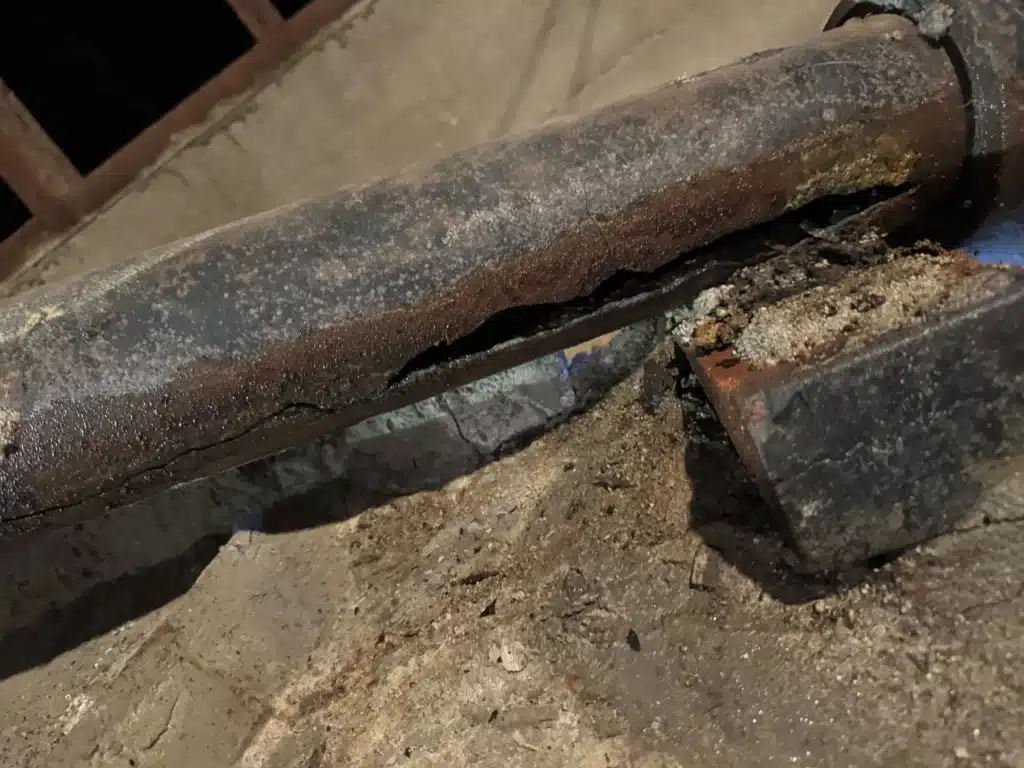
This is where the real cost starts. Grease doesn’t flow cleanly through pipes. It cools as it moves away from the heat of your kitchen drains and starts sticking to pipe walls. Over time, it combines with food solids, soap, and mineral buildup to create a hardened layer inside the pipe that gets thicker with every service cycle. Plumbers call this FOG buildup, and it behaves almost like concrete once it solidifies.
We’ve pulled cameras through commercial kitchen drain lines where the pipe opening had narrowed by more than 70%. The restaurant had been pumping their interceptor every 90 days and thought they were covered. What they didn’t know was that the section of line between the kitchen and the interceptor had years of grease accumulation that no amount of interceptor pumping was going to fix. The drain lines themselves needed to be cleaned.
Pro Tip: Pumping your grease interceptor on schedule is not the same as cleaning your drain lines. The interceptor catches what the drains let through — but grease deposits form in the lines before they ever reach the tank.
That section of pipe is the part most commercial operators don’t think about. They schedule their interceptor service, check the box, and assume the system is healthy. The drain lines between the fixtures and the interceptor are not part of that service. They need separate attention — and if they’ve been accumulating grease for years without cleaning, a camera inspection usually reveals a picture that surprises most owners.
How Hydro Jetting Fits Into Grease Management
Hydro jetting is the most effective way to remove hardened FOG buildup from commercial drain lines. Unlike drain snaking, which punches a hole through the blockage and restores partial flow, commercial hydro jetting services use water pressure up to 4,000 PSI to scour the full interior circumference of the pipe and flush the debris out completely.
For restaurants and food service operations, this means:
- Grease that has been hardening on pipe walls for years gets fully removed, not just pushed downstream.
- The pipe opens back up to its full original diameter, which dramatically improves drain flow and reduces backup risk.
- The result lasts significantly longer than snaking — often one to two years before the next service is needed, depending on the operation’s volume.
The right approach for most commercial kitchens is to have hydro jetting done on the kitchen drain lines and grease line running to the interceptor at least once a year, in addition to the regular interceptor pump-out schedule. High-volume operations — busy restaurants, cafeterias, institutional kitchens — may need it more often. At Father & Son Hydro-Jetting, we almost always pair this with a camera inspection so the operator can see the before-and-after condition of the line firsthand.
Did You Know? Hydro jetting is the method most municipalities recommend for clearing grease from commercial drain lines because it removes FOG deposits completely rather than just breaking them up.
Grease Interceptor Sizing: Getting This Wrong Is Expensive
One of the most common issues we see in older commercial properties is an undersized interceptor. A restaurant that started as a small operation and grew — or a property that changed tenants from a low-grease business to a high-volume kitchen — may be running a 750-gallon interceptor that should be a 1,500-gallon unit.
When an interceptor is undersized, it hits capacity much faster than the pump-out schedule accounts for. Grease bypasses the system and loads the drain lines at a much higher rate. The kitchen drain backups become more frequent, the lines need cleaning more often, and the health inspection risk goes up. The fix is either upsizing the interceptor or increasing the pump-out frequency — sometimes both.
If you’ve inherited a commercial kitchen and you don’t know the interceptor size or when it was last serviced, that’s worth finding out before the next health inspection. A sewer line camera inspection of the kitchen lines can tell you a lot about how well the system has been maintained.
The Health Department Reality
Health inspectors in Los Angeles County look at grease management systems as part of routine inspections. A grease trap that is over capacity, a maintenance log that hasn’t been kept, or a drain line that is backing up during inspection are all citable conditions. Depending on severity, citations can result in corrective action orders, point deductions on health scores, or temporary closure.
The operators we work with who have the fewest issues in this area share one habit: they treat their grease management system like equipment, not like a permit requirement. That means a scheduled pump-out, a maintenance log, and periodic drain line cleaning — not reactive calls after a backup.
Pro Tip: Keep a log of every interceptor pump-out and drain cleaning service. Health inspectors in California can and do ask for this documentation. A clean log is one of the easiest ways to demonstrate that your grease management program is active.
If your drain lines are showing signs of slowing down, recurring backups, or foul odors that persist even after your interceptor has been serviced, the issue is almost certainly in the lines between the kitchen and the tank. Learn more about what your drains are actually telling you before the next backup forces the issue.
Commercial drain line cleaning — especially for grease-heavy operations — is a service we perform throughout the San Fernando Valley, Los Angeles, and surrounding communities. If your kitchen lines haven’t been hydro jetted in more than a year, it’s time to find out what’s in them.
Conclusion
A grease interceptor that gets pumped on schedule and drain lines that get cleaned regularly are the two pieces of a grease management program that actually works. Most operators have one without the other — and that’s exactly why backups keep happening even when the interceptor paperwork is in order.
If you manage a commercial kitchen in the Los Angeles area and want a clear picture of what your drain lines actually look like, call Father & Son Hydro-Jetting at (818) 900-7493 or request a free estimate online. We’ll run a camera through the lines, show you exactly what’s there, and give you a straight answer on what it needs. No upsells, no guesswork — just 45 years of experience in your pipes.
Frequently Asked Questions
How often should a grease interceptor be cleaned?
Most municipalities require grease interceptors to be pumped when the FOG and solids layer reaches 25% of the total tank volume, which typically means every 90 days for mid-volume operations. High-volume kitchens may need service every 30 to 60 days. Always follow your local health department’s specific requirements.
What is the difference between a grease trap and a grease interceptor?
A grease trap is a small, indoor unit installed under the sink or near kitchen fixtures, typically holding 25 to 100 gallons. A grease interceptor is a large underground tank, usually 750 gallons or more, installed outside the building between the kitchen drain lines and the municipal sewer. Both capture FOG, but they differ in size, location, and cleaning frequency.
Can hydro jetting clean commercial grease lines?
Yes — hydro jetting is one of the most effective methods for removing hardened FOG buildup from commercial drain lines. High-pressure water scours the full interior of the pipe, removing grease deposits that snaking leaves behind and restoring the line to its full diameter.
Do health inspectors check grease traps and interceptors?
Yes. In Los Angeles County and throughout California, health inspectors include grease management systems in routine restaurant inspections. Overloaded traps, missing maintenance logs, or evidence of grease bypassing the system are all citable conditions that can affect your health score or trigger corrective action.
What causes a grease interceptor to fail even with regular pumping?
The most common causes are undersizing (the tank is too small for the operation’s FOG output), infrequent service relative to volume, and buildup in the drain lines between the kitchen and the interceptor that bypasses the tank entirely. Regular interceptor pump-outs don’t clean the drain lines — those require separate service, typically commercial drain cleaning.