
If you have called a plumber for a slow drain or a sewer backup, you may have heard the term hydro jetting come up. Maybe it was recommended as an alternative to snaking. Maybe it was described as a stronger version of what you have had done before. Either way, if you are looking at a service estimate and wondering what it actually means, this guide is for you.
The Short Answer
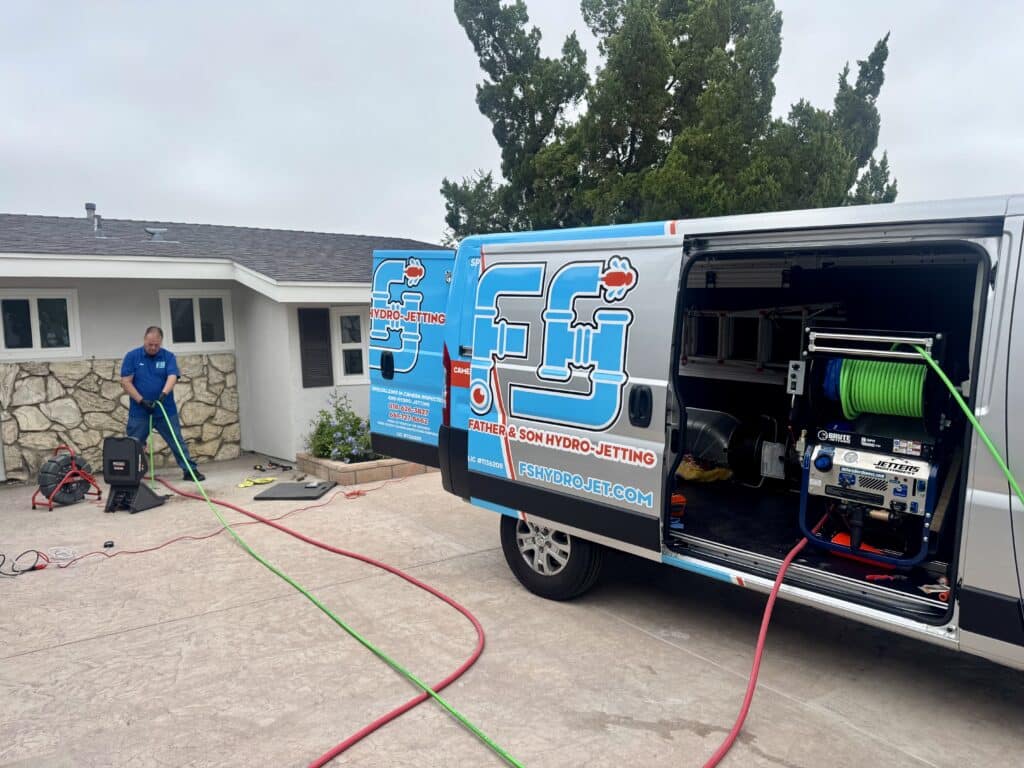
Hydro jetting is a method of cleaning drains and sewer lines using water under very high pressure. Specialized equipment pushes water through a nozzle inserted into your pipe — at pressures up to 4,000 PSI — and the force of the water cleans the entire interior surface of the pipe. Grease, roots, scale, and debris are broken apart and flushed out of the system entirely.
That is the short version. Here is the part that actually matters to a homeowner trying to decide whether it is worth it.
What Snaking Does vs. What Hydro Jetting Does
The most common drain cleaning method is snaking, also called cabling. A flexible metal cable with a cutting head is pushed into the pipe and rotated until it punches through the blockage. Water starts flowing again. Problem solved.
Except it is not really solved. Snaking opens a passage through the clog, but the material that caused the clog — grease coating the pipe walls, roots hanging on at the joint, scale narrowing the diameter — is still there. The pipe has been cleared, but it has not been cleaned. Over the following weeks or months, the same material that caused the original problem begins narrowing the pipe again. Many homeowners end up on a recurring service call cycle without realizing that snaking is only ever treating the symptom.
Hydro jetting addresses the cause. The high-pressure water does not just push through a clog — it scours the pipe wall. The nozzles are designed to spray in multiple directions, cleaning the full 360-degree circumference as the line is worked from one end to the other. When the job is done, the pipe interior looks the way it did when it was new. Grease is gone. Root material is flushed out. Scale is washed away.
What Does 4,000 PSI Actually Mean?
For reference, a standard household garden hose runs at roughly 40 to 70 PSI. A car wash might run at 1,000 to 1,500 PSI. Professional hydro jetting equipment operates at up to 4,000 PSI and delivers water at high volume simultaneously — it is not just pressure, it is pressure and flow together.
That combination is what makes it effective against materials that a snake blade cannot fully remove. Grease that has been bonding to a pipe wall for years does not respond well to a cable. High-pressure water at volume flushes it out completely.
What Hydro Jetting Can Remove
Hydro jetting is effective against the most common causes of recurring drain and sewer problems:
- Grease and fat accumulation from kitchen drains — especially common in homes with high cooking volume and in restaurant lines
- Tree root intrusion — roots that have worked into pipe joints or through small cracks can be cut apart and flushed clear
- Sediment and debris that has settled in bellied or low sections of the line
- Heavy soap and detergent residue in bathroom lines
When Is Hydro Jetting the Right Choice?
Not every drain problem requires hydro jetting. A toilet clog caused by something that should not have been flushed is a different situation from a main sewer line with years of grease accumulation. Hydro jetting makes the most sense when:
- You have had the same line snaked multiple times and the problem keeps coming back
- A camera inspection has shown significant buildup or root intrusion in the line
- You are purchasing a home and want the sewer line cleaned as part of a pre-purchase inspection
- You manage a commercial property with heavy kitchen drain use
- You are preparing for a CIPP lining or other rehabilitation process that requires a clean pipe surface
Is Hydro Jetting Safe for All Pipes?
This is an important question, and the honest answer is: it depends on the condition of the pipe. Hydro jetting is appropriate for most pipe materials including ABS, PVC, and cast iron in reasonable condition. However, a pipe that is significantly deteriorated, cracked, or corroded through the wall may not be a good candidate for high-pressure cleaning — the water pressure that cleans a healthy pipe could stress a damaged one further.
That is why a camera inspection before hydro jetting is not just a nice-to-have — it is how responsible contractors approach the work. At Father & Son, we look at the line before we clean it. If we find something that changes the picture, we tell you before we start.
The Camera Inspection Connection
Hydro jetting and camera inspections work well together, and at Father & Son we include a complimentary narrated video with our sewer inspections. Inspecting before cleaning shows us what we are working with. Inspecting after cleaning confirms the results and gives you a documented record of your pipe’s condition.
That after-inspection video is also useful if you are selling a home, reporting back to a real estate agent, or simply want to know the current state of your system after the service.
What to Expect During the Appointment
Hydro jetting is performed from a cleanout access point — a pipe fitting that gives us access to the interior of your sewer line. If your home does not have a cleanout or it is in an inconvenient location, we can discuss adding one.
Once the nozzle is in the pipe, we advance it through the line while the high-pressure water cleans as it goes. Depending on the length of the run and the severity of buildup, most residential services take a few hours. The process is not disruptive to your yard or structure — it is performed entirely from the cleanout access.
How Often Should Hydro Jetting Be Done?
There is no universal schedule. How often your lines need professional cleaning depends on your property, your usage, and what the inspection shows. Some properties benefit from it every couple of years. Others may go considerably longer. If you are on a cycle of repeat snaking calls, that is a good signal that hydro jetting might reset the baseline and give you a much longer stretch before the next service is needed.
Father & Son Hydro-Jetting — Serving the San Fernando Valley for Over 45 Years
Father & Son Hydro-Jetting is a family-owned, locally based business serving Canoga Park, Chatsworth, West Hills, Northridge, Woodland Hills, Calabasas, and communities throughout the San Fernando Valley, Santa Clarita Valley, Conejo and Simi Valley. We are licensed (CA Lic. #1136208), and every hydro-jetting job is backed by a camera inspection so you have a documented record of the work.
If you have questions about whether hydro jetting is the right fit for your situation, call us at (818) 900-7493. We are happy to talk through it before you book anything.