
If your sewer line is failing, you don’t have to tear up your yard to fix it. Sewer line rehabilitation—sometimes referred to as “lining a sewer line” or “CIPP liner”—lets licensed plumbers restore underground pipes using minimal excavation. Depending on the method used, the work can be performed with just one small access point, with no backhoes, no destroyed landscaping, and usually no multi-day disruption to your home. For most homeowners, it’s a faster, smarter, and more cost-effective solution than traditional excavation.
What Is Sewer Line Rehabilitation?
Sewer line rehabilitation is a category of methods for restoring damaged underground sewer pipes while minimizing the amount of digging required. Rather than excavating a trench across your entire property, technicians perform most or all of the work underground, leaving driveways, sidewalks, and gardens largely intact.
There are two main approaches:
Trenchless Sewer Repair (CIPP Lining): A resin-coated sleeve is inserted into the existing pipe through a single access point, inflated, and cured into a solid inner layer. This effectively creates a new pipe inside the old one, sealing cracks and leaks without removing the original pipe—and without requiring any additional excavation beyond that one entry point.
This method restores full flow capacity.
Did You Know? Trenchless technology was developed in Europe as a way to preserve their historic roadways and buildings.
The Real Benefits for Homeowners
1. Your Property Stays Intact
This is the benefit most homeowners care about most. With traditional sewer replacement, crews dig trenches that can run the full length of your yard—through lawns, gardens, patios, and driveways. Restoring that damage after the job is done can cost thousands of dollars on top of the plumbing work itself.
With CIPP lining, only a single access point is needed, and your landscaping stays untouched. You avoid the sweeping excavation of traditional methods. For homeowners with mature trees, decorative hardscaping, or a well-maintained lawn, that protection can make sewer rehabilitation the obvious choice.
2. The Job Gets Done Faster
Most sewer rehabilitation projects can be completed within a day, minimizing inconvenience. Compare that to traditional excavation, which often means multiple days of digging, pipe work, backfilling, and surface restoration. Less time on-site also means less disruption to your household routine.
3. Lower True Cost When You Factor Everything In
The upfront price for rehabilitation work can appear higher than a traditional dig. But that comparison rarely tells the whole story. When you account for landscaping restoration, concrete replacement, and the labor involved in traditional excavation, both pipe bursting and CIPP lining are typically more cost-effective than traditional excavation-dependent methods. Lastly, with CIPP Lining, since it emulates what is already there like a second skin, there is no need to worry about inadequate slope that could occur when trenching a new sewer line. Trenching and laying new pipe by hand, if done improperly, runs a risk of having inadequate slope which can hinder even a brand new sewer once it is all done.
Pro Tip: Get an itemized quote that includes surface restoration costs before comparing rehabilitation vs. traditional pricing. The true cost comparison often flips once you factor in what you’d need to fix afterward.
4. The New Pipe Lasts Decades
The liners and replacement pipes used in sewer rehabilitation are made from corrosion-resistant materials such as epoxy resin or high-density polyethylene (HDPE). These materials resist rust, root intrusion, and joint separation—problems that frequently affect older sewer systems. Sewer pipe liners are rated to last up to 50 years. If your home has old cast iron or clay pipes that have been failing repeatedly, replacing them with modern HDPE or CIPP materials means you’re very unlikely to face this problem again during your lifetime of ownership. Case in point, the manufacturers that we use comes with a 50 years manufacturer warranty.
5. It’s Better for the Environment
Traditional sewer replacement disturbs large amounts of soil, removes mature vegetation, and requires heavy machinery running for extended periods. Sewer rehabilitation reduces waste, protects trees and soil, and limits the carbon footprint of the project. Because excavation is minimal, the surrounding ecosystem stays largely undisturbed—an important consideration for homeowners with older trees whose roots can be damaged by deep digging.
6. It Can Boost Your Home’s Value
A newly rehabilitated sewer line can increase home value by $3,000–$5,000 and removes a major concern for potential buyers. Buyers increasingly request sewer inspections before closing, and a failing or aging sewer line can significantly reduce offers—or kill deals entirely. Getting sewer rehabilitation done proactively is both a quality-of-life improvement and a sound financial move.
Did You Know? You can pair sewer rehabilitation with professional hydro-jetting services to fully clear the line of roots and debris before the new liner is installed. This helps ensure a clean bond and maximizes the lifespan of the new pipe. If the line is cast iron, it would need a qualified contractor to descale the line prior to hydro-jetting, making the cast iron as smooth as possible for the liner.
When Should You Consider Sewer Rehabilitation?
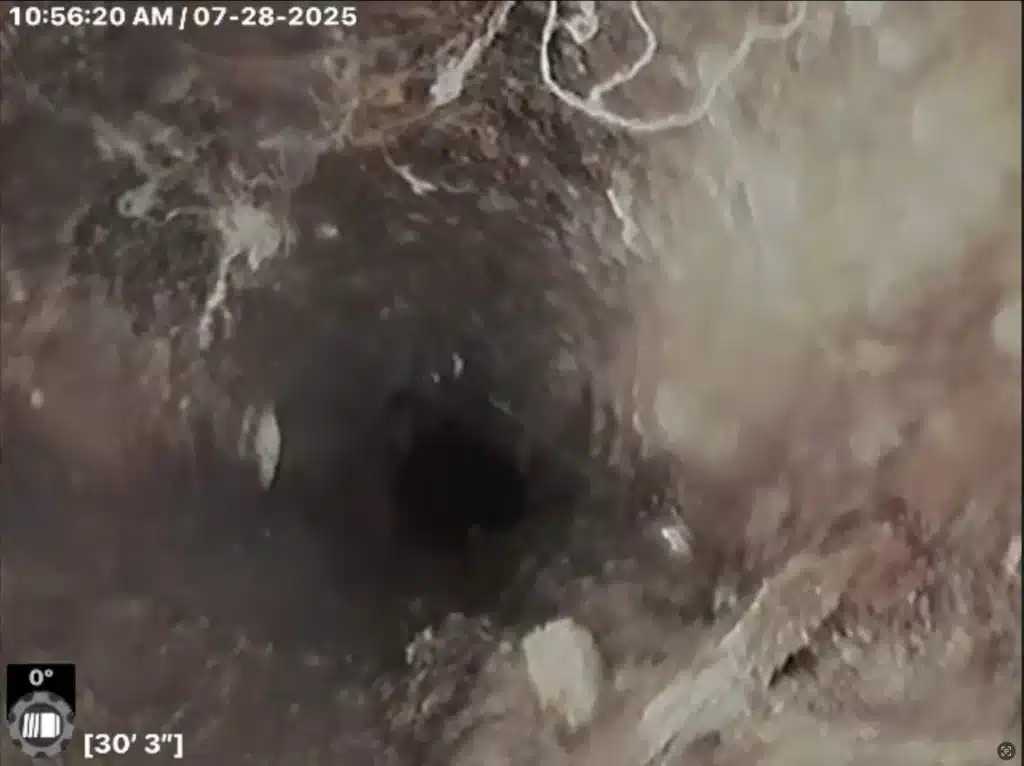
Not every sewer problem requires full replacement. A video sewer inspection is the most reliable way to see exactly what’s happening inside your pipes. That said, rehabilitation is often the right call when:
- You’re experiencing recurring backups, slow drains, or sewage odors
- Your home has older cast iron, clay, or Orangeburg pipes
- Tree roots have infiltrated the line repeatedly
- You’re buying or selling a home and the inspection reveals significant pipe deterioration
- Your pipe has collapsed sections, widespread cracks, or severe offset joints
For homes with cast iron pipes that are corroding from the inside out, professional descaling followed by CIPP lining can rehabilitate the pipe without replacement—an even less invasive option worth exploring first.
Pro Tip: If you’re buying a home, schedule a sewer scope inspection before closing. It takes about an hour and can save you from inheriting a $10,000+ problem.
Trenchless Sewer Repair vs. Trenching a Sewer Line
| Trenchless Sewer Repair (CIPP) | ||
| Best for | Cracked, leaking, or root-infiltrated pipes | |
| Excavation required | One access point | |
| Old pipe removed? | No (new pipe forms inside) | |
| Pipe size after | Slightly reduced diameter | |
| Typical timeline | 1 day | |
| Lifespan | 50+ years |
The right method depends on your specific pipe condition and the location of necessary access points. A qualified contractor will recommend the best approach after reviewing your inspection footage.
What to Expect During the Process
The process typically starts with a video camera inspection of the sewer line. This lets the crew pinpoint the exact location and nature of the damage before any work begins. From there, the line is cleaned—often using hydro jetting to blast away roots, grease, and scale buildup—to prepare the pipe wall for either lining or bursting.
For CIPP lining, the resin-saturated liner is pulled or inverted into position through a single access point, inflated, and then cured using hot water, steam, or UV light depending on the system.
Once complete, a post-inspection camera run confirms the new pipe is properly seated, sealed, and flowing correctly. According to the Environmental Protection Agency, trenchless methods are among the most environmentally sustainable approaches to infrastructure repair, with significantly reduced site disturbance compared to open-cut methods.
For additional technical background on pipe materials and performance standards, the Water Research Foundation publishes research on sewer rehabilitation methods used across North America.
Did You Know? CIPP lining works even when a sewer line runs under a concrete slab, driveway, or patio—situations where traditional excavation would be extremely costly and disruptive.
Choosing the Right Company
Sewer rehabilitation requires specialized equipment and training. When evaluating companies, look for those that own their own equipment—this is a significant investment, and companies that have made it are serious about the work. You’ll also want to confirm they’re licensed, pull the required permits, and provide a video inspection both before and after the job.
Father & Son Hydro-Jetting has served the Los Angeles area for over 45 years, handling everything from sewer camera inspections and hydro jetting to full sewer rehabilitation across the San Fernando, Conejo, and Santa Clarita Valleys.
Ready to find out whether sewer line rehabilitation is right for your home? Contact Father & Son Hydro-Jetting to schedule a sewer line inspection. Our team will show you exactly what’s happening inside your pipes—with a narrated video report—so you can make a confident, informed decision. Call (818) 900-7493 or request a free estimate online.
Frequently Asked Questions
How long does sewer line rehabilitation take?
Most projects are completed in a single day. The timeline depends on the length of the line, access conditions, and whether CIPP lining can be used. Either way, it’s significantly faster than traditional excavation, which can take several days or longer.
Is sewer rehabilitation more expensive than traditional methods?
The upfront cost can be higher, but the total project cost is often lower once you factor in landscaping restoration, concrete repair, and labor associated with traditional excavation. Most homeowners find rehabilitation to be the more cost-effective option overall.
How long will a CIPP sewer liner last?
Trenchless sewer liner warranty on CIPP materials is warranted to last 50 years. These materials resist corrosion, root intrusion, and joint separation—common failure points in older clay and cast iron pipes. How long will it last? Given the material used, it is expected to last long past the 50 year warranty.
Can rehabilitation methods work under my driveway or concrete slab?
Yes. A key advantage of both CIPP lining is that it works effectively even when the sewer line runs beneath concrete driveways, patios, or slabs—situations where traditional digging would be extremely disruptive and expensive.
What signs indicate I might need sewer line rehabilitation?
Recurring drain backups, gurgling sounds from your toilets, sewage odors inside or outside your home, and unusually wet or sunken areas in your yard are all warning signs. A video camera inspection is the most reliable way to confirm whether rehabilitation is needed.