

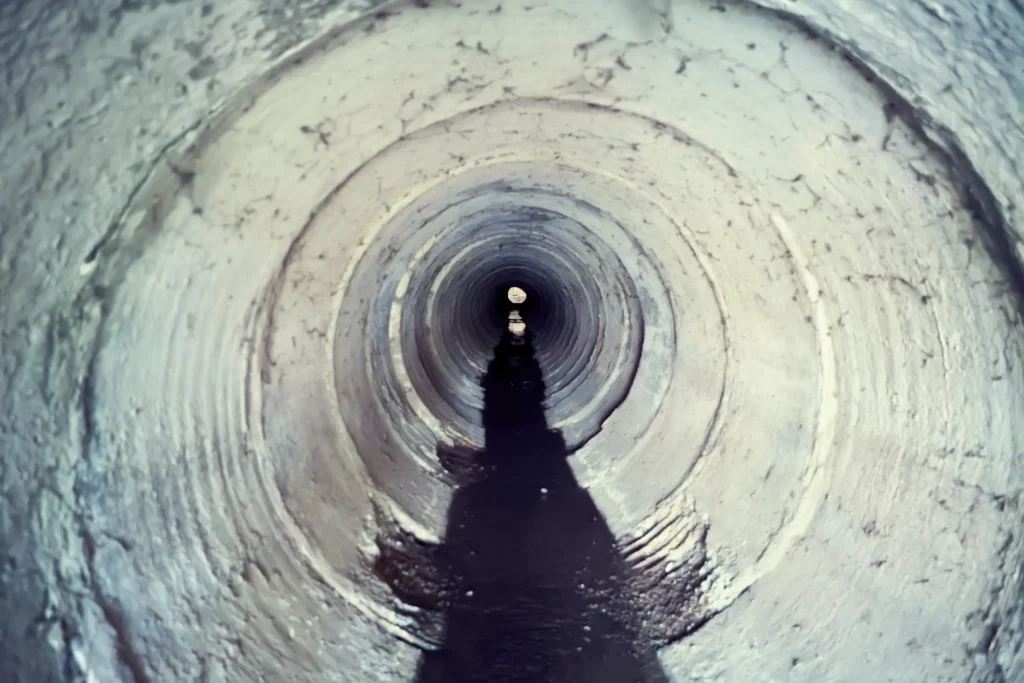
A sewer camera inspection shows the exact inside condition of your sewer line through live video. In under an hour, it reveals root intrusion, cracks, offset joints, grease buildup, and low spots called bellies, so you know what’s wrong before you pay for a fix.
What a Sewer Camera Inspection Actually Shows
A technician feeds a flexible cable with a waterproof camera into your line through a cleanout or vent. The camera sends live video to a monitor, and you watch it happen in real time.
Quick definition: A sewer camera inspection is a video exam of your underground sewer line. A trained tech pushes a camera through the pipe to look for damage, blockages, and buildup that you cannot see or reach any other way.
At Father & Son Hydro-Jetting, every inspection comes with a complimentary narrated video. You are not handed a report full of guesses. You watch the footage with your technician, who explains what each shape and shadow means as it appears on screen.
The Five Things Cameras Catch Most Often
Most footage falls into one of five categories: root intrusion, cracks, offset joints, grease buildup, and bellied sections. Some lines show just one issue. Others show two or three stacked on top of each other. Some have none at all.
Why Video Beats a Written Report
A written report tells you a problem exists. The video shows you exactly where it sits, how bad it looks, and how much pipe is affected. That difference changes how you plan a fix and how confident you feel about paying for it.
Root Intrusion: The Most Common Thing We See on Screen
Tree roots chase moisture. Any crack, loose joint, or hairline gap in a pipe gives a thirsty root system somewhere to go. Once a root finds its way in, it keeps growing.
On camera, root intrusion looks like thin white or brown strands hanging into the pipe, sometimes a few threads and sometimes a thick mass that nearly blocks the flow. This is one of the most common things our technicians point out during a narrated inspection, and it’s usually sitting right at a joint or a hairline crack rather than in the middle of a solid pipe run.
Did you know? Tree roots don’t need to sit near your pipe to reach it. Root systems commonly stretch well beyond a tree’s canopy, sometimes 30 feet or more, chasing a steady moisture source like a leaking joint.
How Roots Get In
Roots rarely punch through solid pipe. They slip through joints, cracks, or worn seals, then widen the gap as they grow thicker year after year.
What Happens If You Ignore It
Left alone, root masses trap toilet paper, grease, and debris, turning a small intrusion into a full blockage. That is usually when a slow drain turns into a backup.
Pro tip: If you have fast-growing trees like Magnolias or Ficus within 30 feet of your line, ask for a camera check every year instead of waiting for a clog to tell you something is wrong.
Cracks and Offset Joints: When Pipe Sections Shift
Cracks show up as jagged dark lines running along or across the pipe wall. Offset joints look different. They show up as a visible step where one section of pipe no longer lines up with the next.
Some of the country’s sewer infrastructure is well over 100 years old, and camera inspection has been the standard way to check a pipe’s real condition for decades, according to EPA research on wastewater collection systems. Older cast iron and clay pipe are especially prone to hidden wear, since decades of soil shifting slowly pull joints apart while corrosion works from the inside out.
Reading a Crack on Screen
A hairline crack with no separation is often something to monitor. A crack with visible gaps, water seeping through the pipe wall, or debris pushing through is a repair candidate.
When an Offset Becomes a Problem
An offset only becomes urgent once it starts catching waste and paper, but especially when there is no water being held behind the separation. That means there is a separation large enough for water to leave the pipe and go into the soil. Our complete guide to sewer line inspections covers how technicians decide which offsets need attention now versus later.
Grease Buildup: What Kitchen Habits Look Like Underground
Grease does not flush away. It cools as it travels, sticks to the pipe wall, and builds up layer by layer until the opening narrows.
What It Looks Like on Camera
On screen, grease buildup looks like a thick, uneven coating lining the inside of the pipe, often yellow-brown, sometimes nearly closing off the visible opening entirely.
Why Homes Are Not Exempt
Restaurants are not the only culprits. Bacon grease, butter, and cooking oil poured down a kitchen sink behave the same way over time.
Did you know? A grease coating can build up for years without a single clog, since it narrows the pipe gradually instead of blocking it all at once.
If your footage shows heavy coating, hydro jetting is usually the fix, since it scours the full pipe circumference rather than punching a single hole through the buildup. Our hydro jetting page covers how that process works in more detail.
Bellied Pipes: The Low Spot That Never Drains Right
A pipe belly is a section that has sunk lower than the rest of the line, usually from soil settling underneath it. Water and waste pool in that dip instead of flowing straight through. This is frequently seen in sewer lines that were trenched in by hand.
Spotting a Belly on Video
On camera, a belly shows up as standing water sitting in the pipe long after the rest of the line has drained. The water level and shape make it easy to spot once you know what to look for.
Repair Options Once a Belly Shows Up
Repairing a belly is different than repairing another sewer issue- here is why:
- Pipe bursting or CIPP Lining emulates the existing path of the sewer line if not the sewer itself. So, if there is a belly, the belly will remain.
- Trenching it out by hand is the only way to permanently correct the issue. This must be done by a certified contractor that knows code requirements for grade/slope.
Pro tip: A minor belly with light standing water, approximately five feet or so, will not have a backup as often as one that runs long. The reason is: there is enough room for the built up pressure behind it to blow out the issue. If the line is, let’s say, 30 feet long, then there is too much space in the belly to allow itself to fix itself with pressure. A deep belly that traps solids every time usually needs a structural fix.
What Happens After the Camera Comes Out
Once the inspection wraps up, you get more than a verbal summary. Father & Son pairs your complimentary narrated video with a written record of what the camera found, giving you documentation of your line’s condition rather than a secondhand description.
That record matters for more than peace of mind. Real estate deals, insurance claims, and future service calls all move faster when you hand over footage instead of describing a problem from memory. InterNACHI’s sewer scope inspection standards call for a report documenting what was found, where it sits, and which sections could not be inspected — the same standard of detail you get in your video and report from us.
For the full rundown on how the entire process works from start to finish, see our sewer inspection services page.
Frequently Asked Questions
How long does it take to get sewer camera inspection results? Most homeowners see the footage live during the inspection itself, with your technician narrating what’s on screen as it happens. A written summary and video copy follow so you have a record to keep.
Can a sewer camera inspection tell me the pipe material? Yes. The camera clearly shows whether your line is cast iron, clay, PVC, or another material, which helps predict how much life is left.
Is a sewer camera inspection messy or invasive? No. The camera enters through an existing cleanout or vent, so there is no digging and no disruption to your yard or home during the inspection itself.
What if the camera cannot get through the whole line? A blockage, heavy root mass, or sharp bend can stop the camera partway. When that happens, your technician explains what is blocking the path and what needs to happen before the rest of the line can be viewed.
Do I need a sewer camera inspection if my drains seem fine? Older homes with cast iron or clay pipe can develop problems long before you notice a slow drain. A routine inspection catches these issues early, while they are still cheap to fix.
See What’s Really Going On Underground
A sewer camera inspection turns guesswork into a clear picture. Instead of wondering why a drain runs slow or worrying about what a home purchase might be hiding, you get to watch the exact condition of your line and make decisions based on what the footage actually shows.
Ready to see what’s happening in your pipes? Schedule a sewer camera inspection with Father & Son Hydro-Jetting today and get your complimentary narrated video.